METALWAKE
It began, as most great things do, in a waiting room.
Mel Attonine — veteran of the Sleepattle underground scene, survivor of three bands and countless alarm clocks — had arrived forty-five minutes late to the unemployment office on a grey Tuesday morning. It was, by his own admission, not his first offence. Somewhere across town, another job interview had started without him. Again.
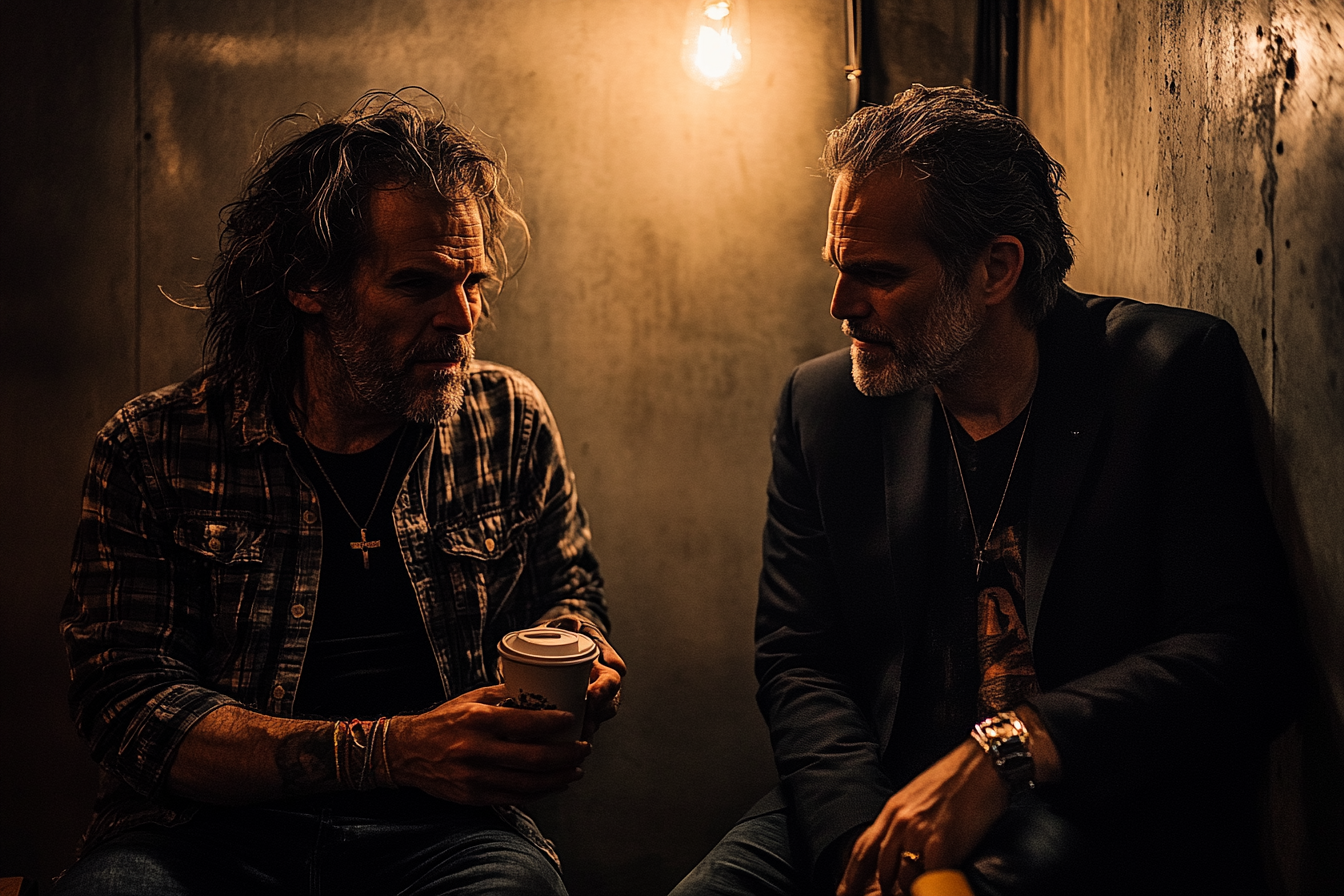
Slumped in a plastic chair across from him was Jimmy Sheets — a man who looked, at first glance, like he had wandered in from a university faculty meeting. Blazer. Reading glasses. A thermos of coffee that suggested he had been awake since before the concept of night existed. Jimmy had his own story, his own reasons for being there. What mattered was that the two men got talking, discovered a mutual passion for heavy music, and realised — somewhere between form B-47 and the second cup of vending machine coffee — that they were supposed to be in a band together.
The name came easily. The mission was clear. What they needed now were the right people.
The audition process that followed was, by all accounts, extensive. Mel and Jimmy searched with the kind of energy that only the newly unemployed can muster. They posted flyers. They haunted rehearsal spaces. They attended open mic nights that Jimmy left promptly at 10 PM. Standards were high. Chemistry was everything.
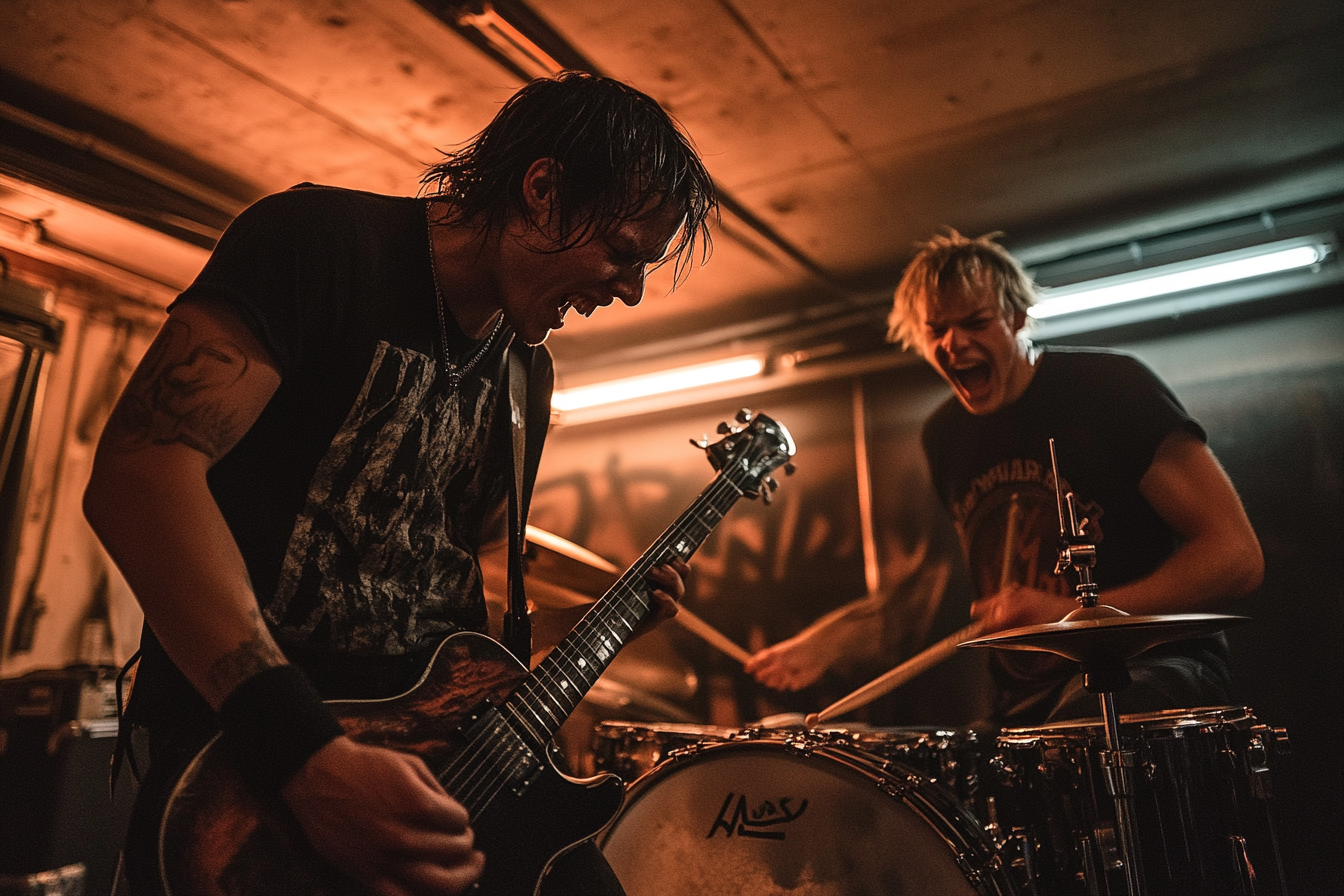
Brad Linnen showed up to one of these auditions under circumstances that have never been fully clarified — even by Brad himself. He was young. Perhaps very young for this particular room. But the moment he plugged in and played, something happened that nobody had expected: it felt right. He was in before he fully understood what he'd agreed to. In many ways, he still doesn't. But he keeps showing up, and his playing keeps getting heavier, and nobody's complaining.
El Sueno Oscitant requires a paragraph of his own, though he would probably prefer not to be discussed at all. He arrived. He played. The matter was settled. His origins remain a topic of quiet speculation within the band, and his name — for those who look closely enough — may contain more autobiography than any formal bio ever could.
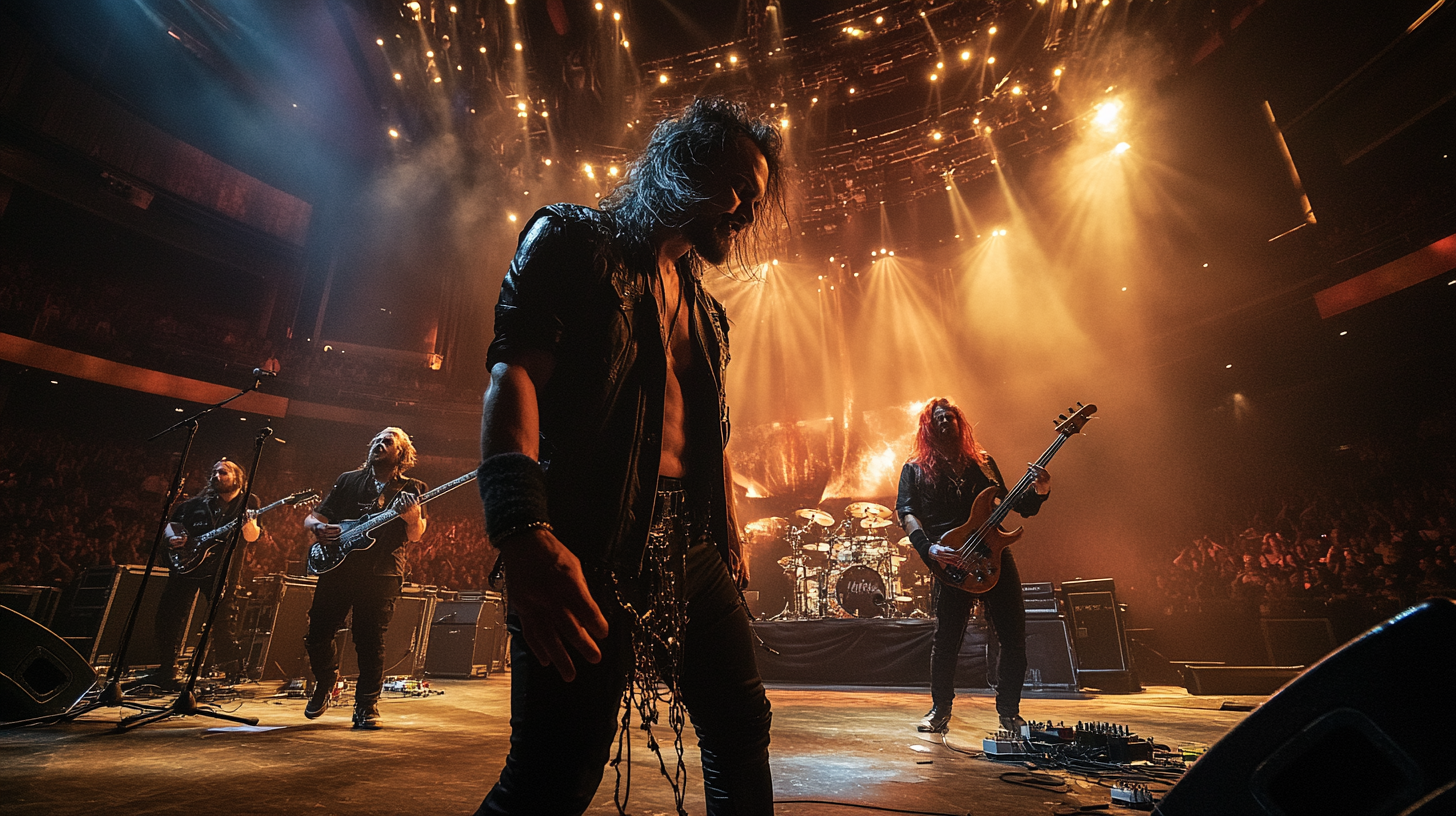
Gunther Schlaflos came to them via a handwritten referral from a marching ensemble director who described him, diplomatically, as "perhaps better suited to a different context." One rehearsal was enough. Gunther hit a snare with the force of a man settling a personal score with silence itself, and MetalWake had their drummer.
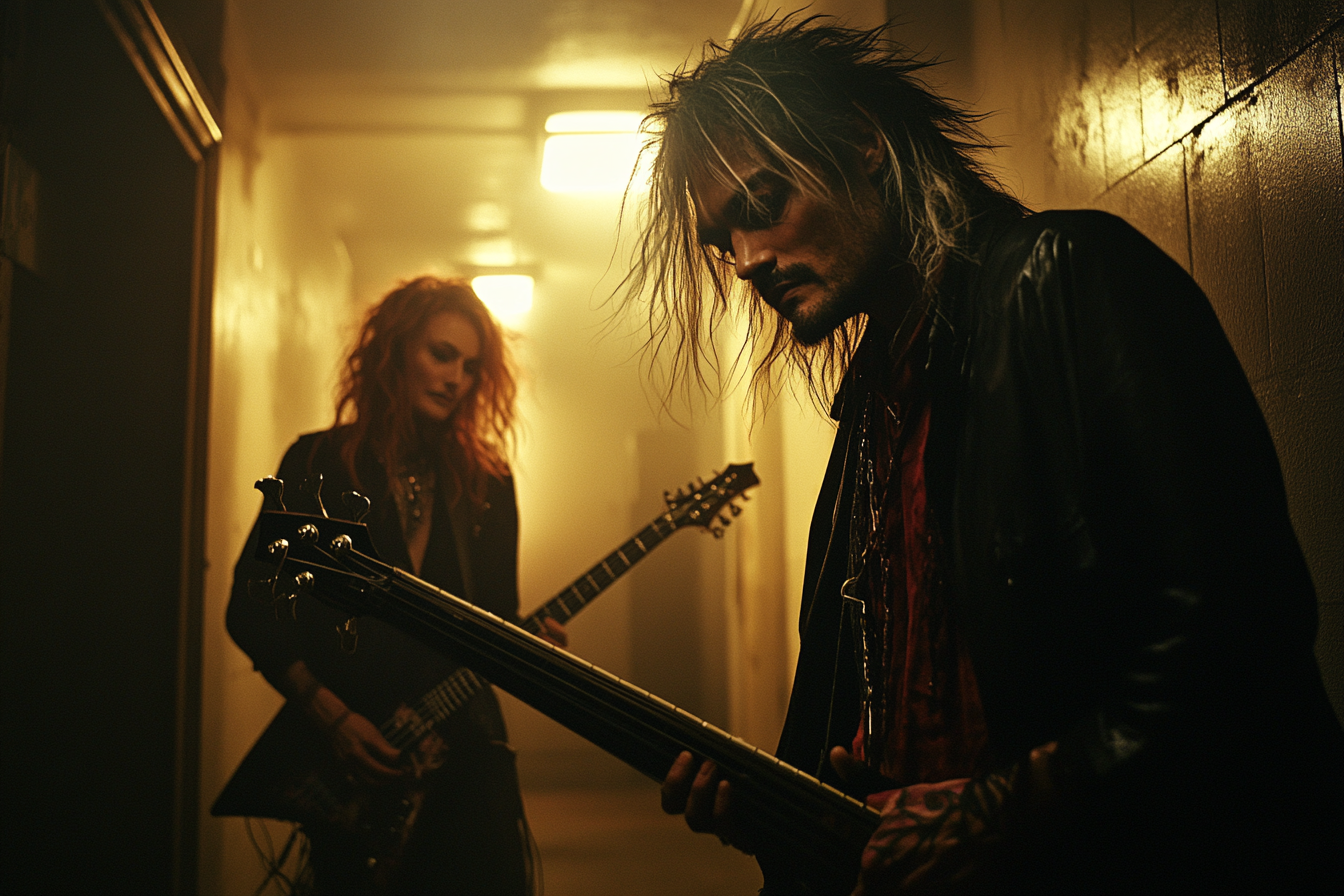
As for Trudy Awake — her relationship with the band is, like Trudy herself, impossible to pin down. She and Mel have history. A brief, warm, chaotic chapter that ended the way most chapters involving Trudy end: with her already halfway out the door before the story was finished. They parted well. They stayed close. And when MetalWake needed a female voice — something that could cut through the noise like a blade through a dream — there was never any real discussion about who to call.
She answers when she feels like it. She shows up when the moment is right. And every time she takes the stage with them, the band sounds like a version of itself it didn't know existed.
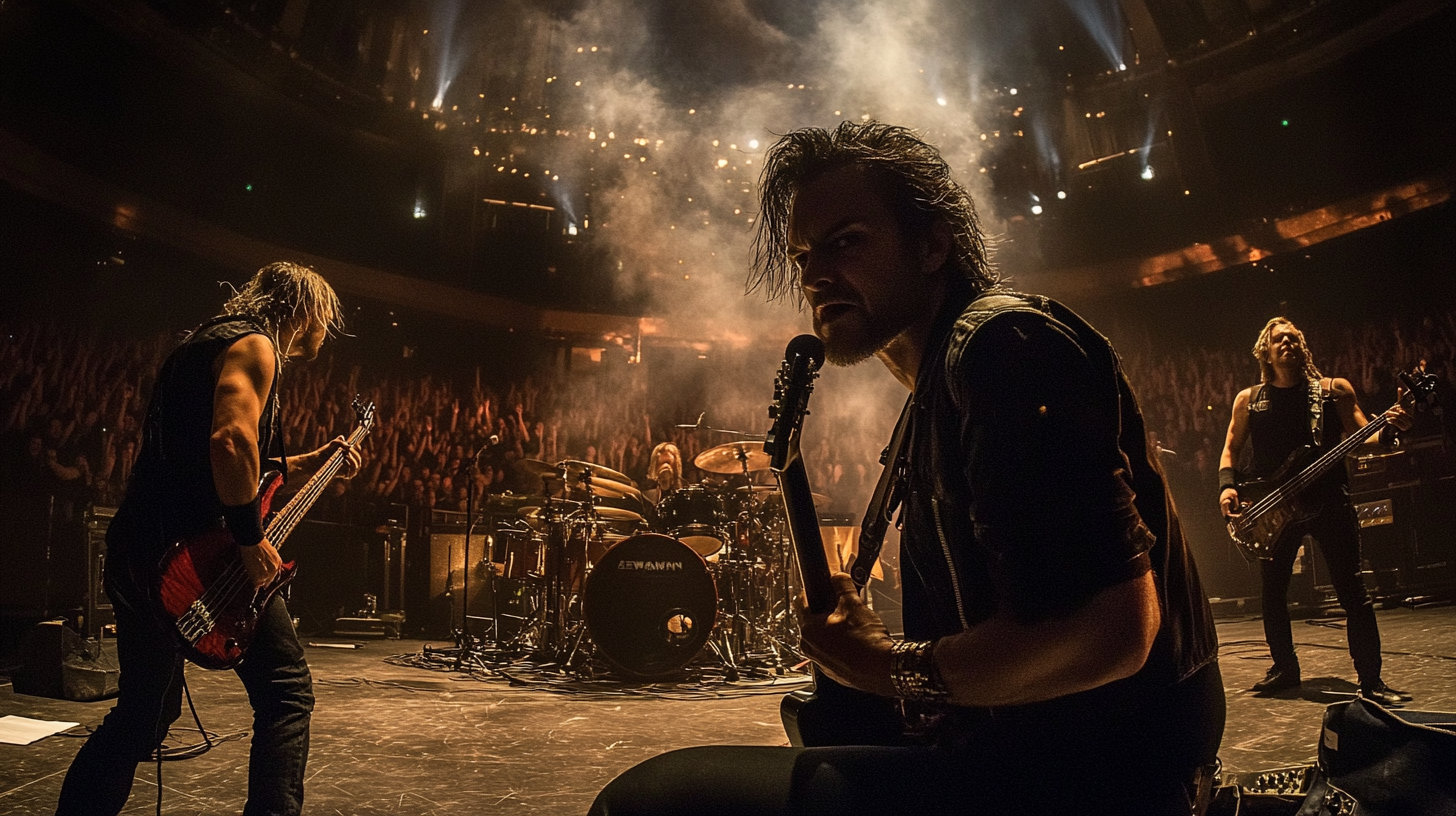
Describing the musical style of MetalWake is, to put it diplomatically, a moving target.
The band operates somewhere across the vast and unforgiving landscape of heavy metal — touching industrial, doom, classic heavy, thrash, and occasionally something that defies categorisation entirely. They are, as Jimmy once put it during a surprisingly coherent post-soundcheck interview, "still looking."
The primary variable, as any seasoned MetalWake observer will confirm, is Mel Attonine's morning.
The evidence is well documented at this point. On nights where Mel has achieved something approaching a full eight hours, eaten a real breakfast, and located both of his shoes before noon, the result tends toward the melodic — soaring vocal lines, riffs with actual structure, the occasional moment of genuine accessibility. These are good days. The band enjoys these days.
Then there are the other days.
When Mel surfaces before he is ready — or worse, when he surfaces technically on time but under circumstances involving the previous evening's poor decisions — the musical output shifts accordingly. The vocals drop. The tempo slows to something that feels like concrete setting. The riffs get darker, longer, and considerably angrier. On at least two recorded occasions, what began as a straightforward heavy rock track became, by the second chorus, something that could reasonably be classified as funeral doom. Nobody stopped it. It felt appropriate.
The rest of the band has adapted remarkably well to this system. Jimmy arrives prepared for any tempo. Brad watches Mel's face during warm-up and adjusts his tuning accordingly. Gunther hits things at whatever volume the room requires — which, in fairness, is always considerable. And El Sueno Oscitant appears entirely unaffected by stylistic direction, as if he exists slightly outside the normal parameters of genre to begin with.
They are still looking for their niche. The niche, for its part, has not yet been brave enough to identify itself.
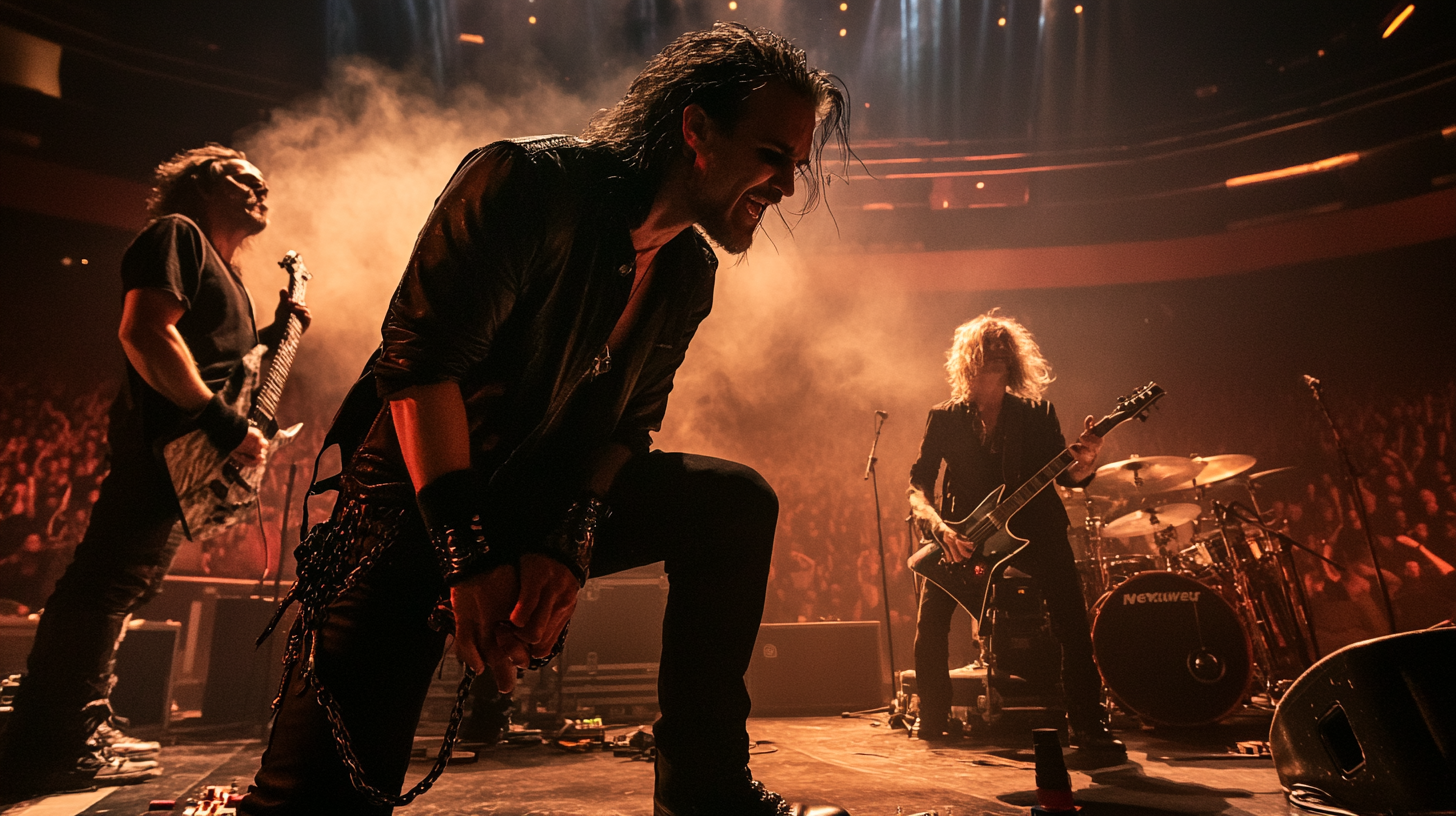
MetalWake released their debut album "Wake the Hell Up!" to an audience that was, frankly, not yet awake enough to fully appreciate it. Reviews came in gradually. Word spread slowly. And then, like consciousness creeping in on a reluctant Sunday morning, it hit.
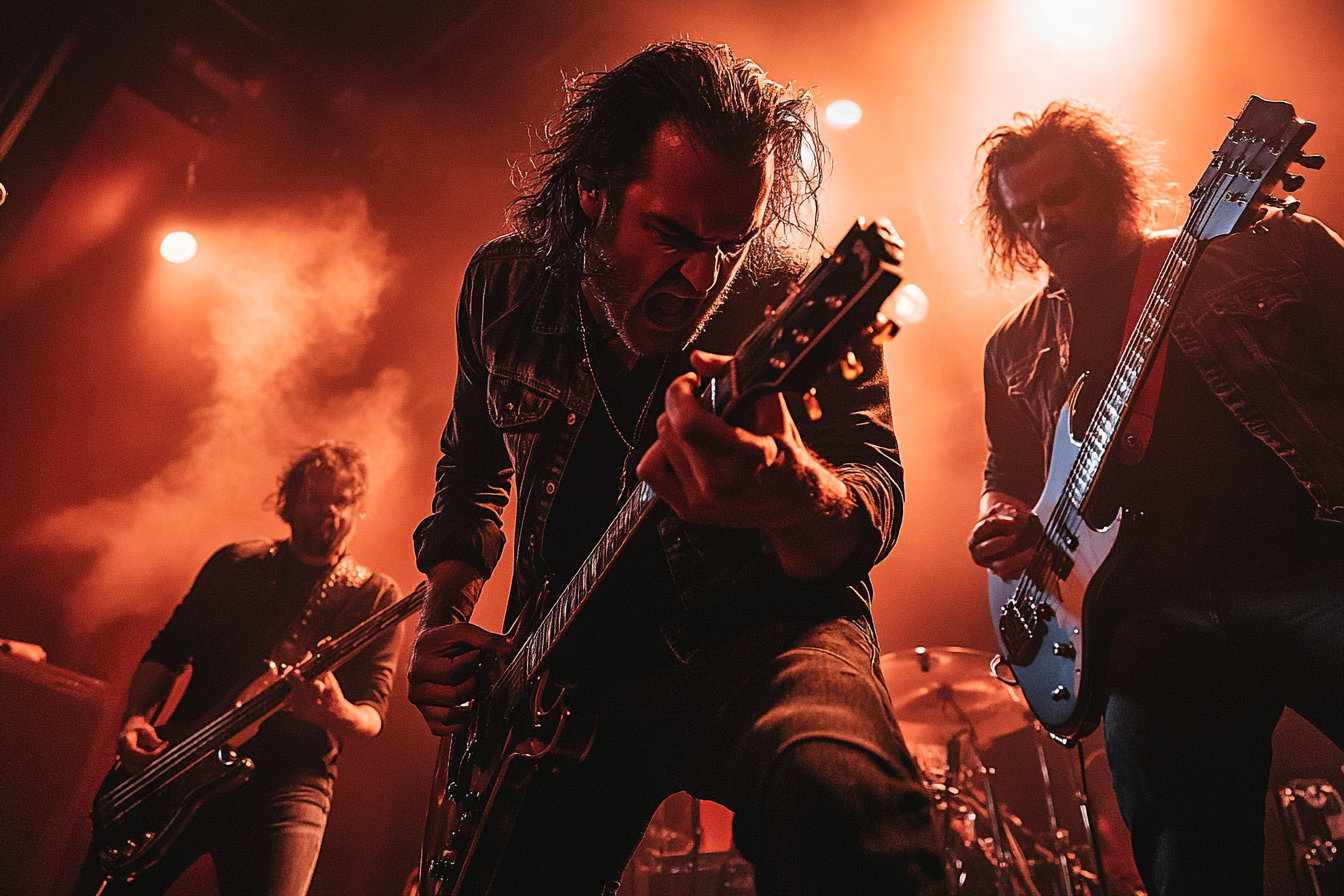
MetalWake. Rise. Eventually.
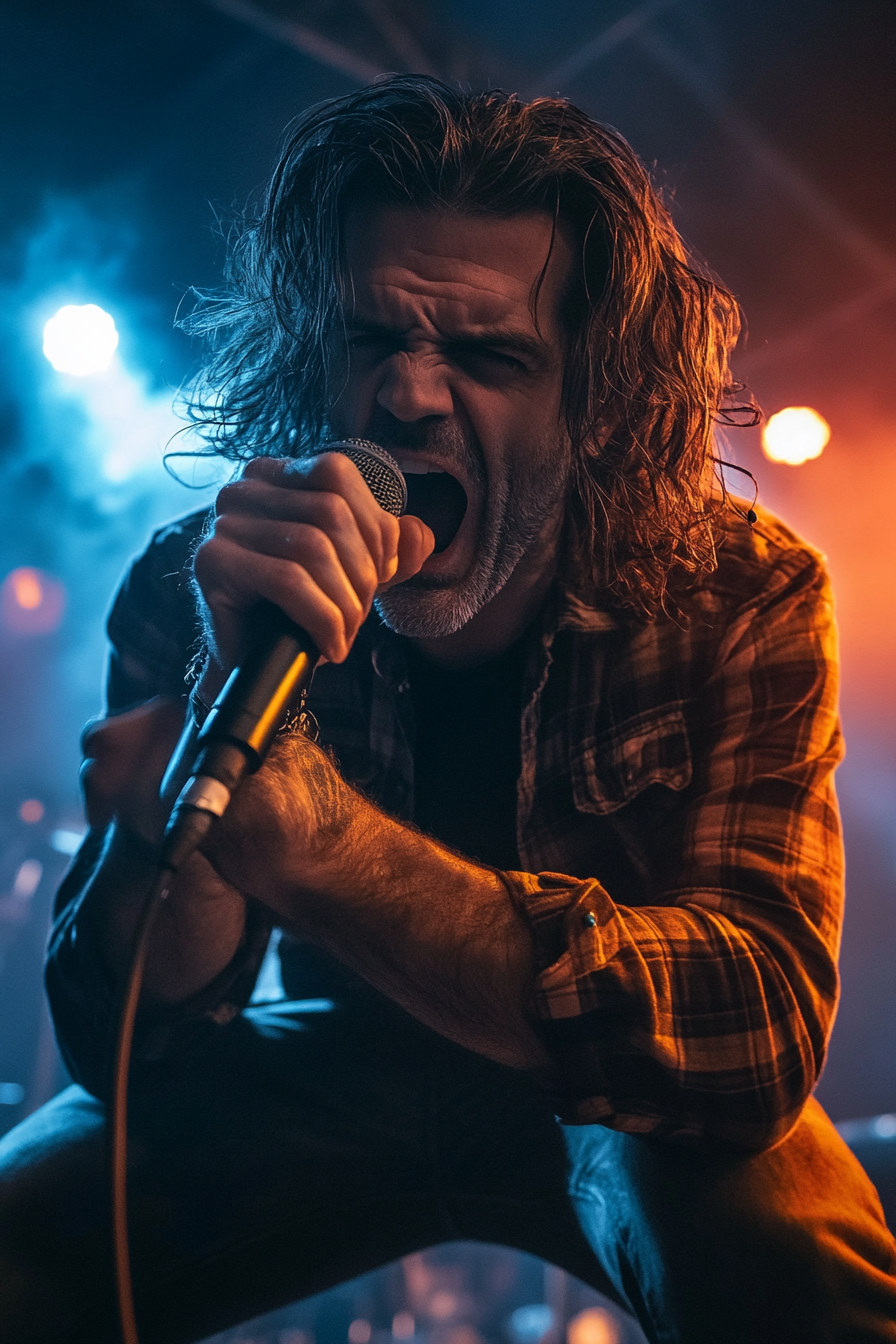
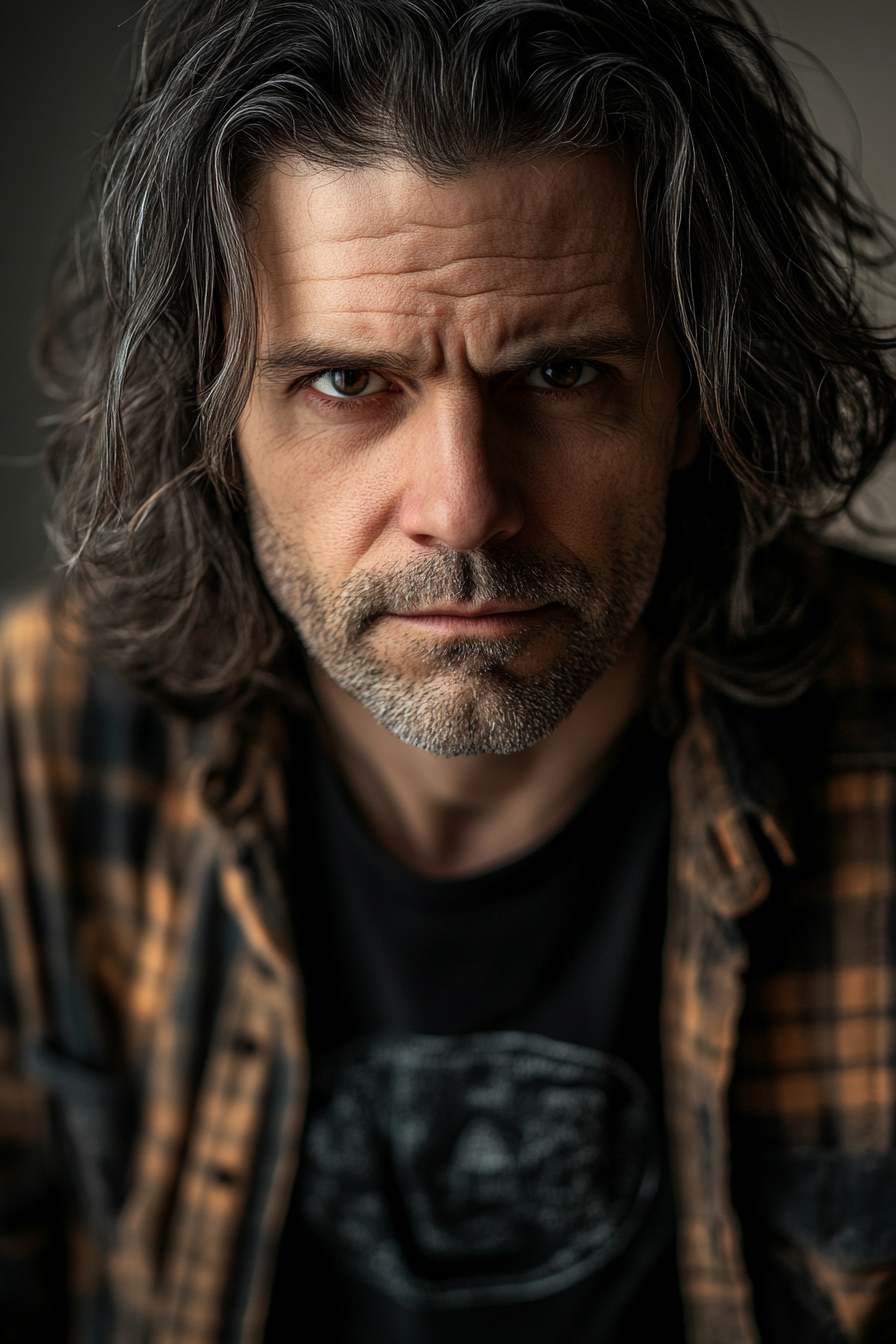
Mel's raw, gravelly howl was forged in the grunge trenches of Sleepattle's underground scene. A veteran of three moderately successful grunge acts, his career took a turn when chronic oversleeping led to missed soundchecks, forgotten rehearsals, and one legendary incident involving a tour bus, a motel, and a checkout time. Fired from his last band via Post-It note on his pillow, Mel channelled his shame and his snooze button into something heavier. No regrets. Mostly.
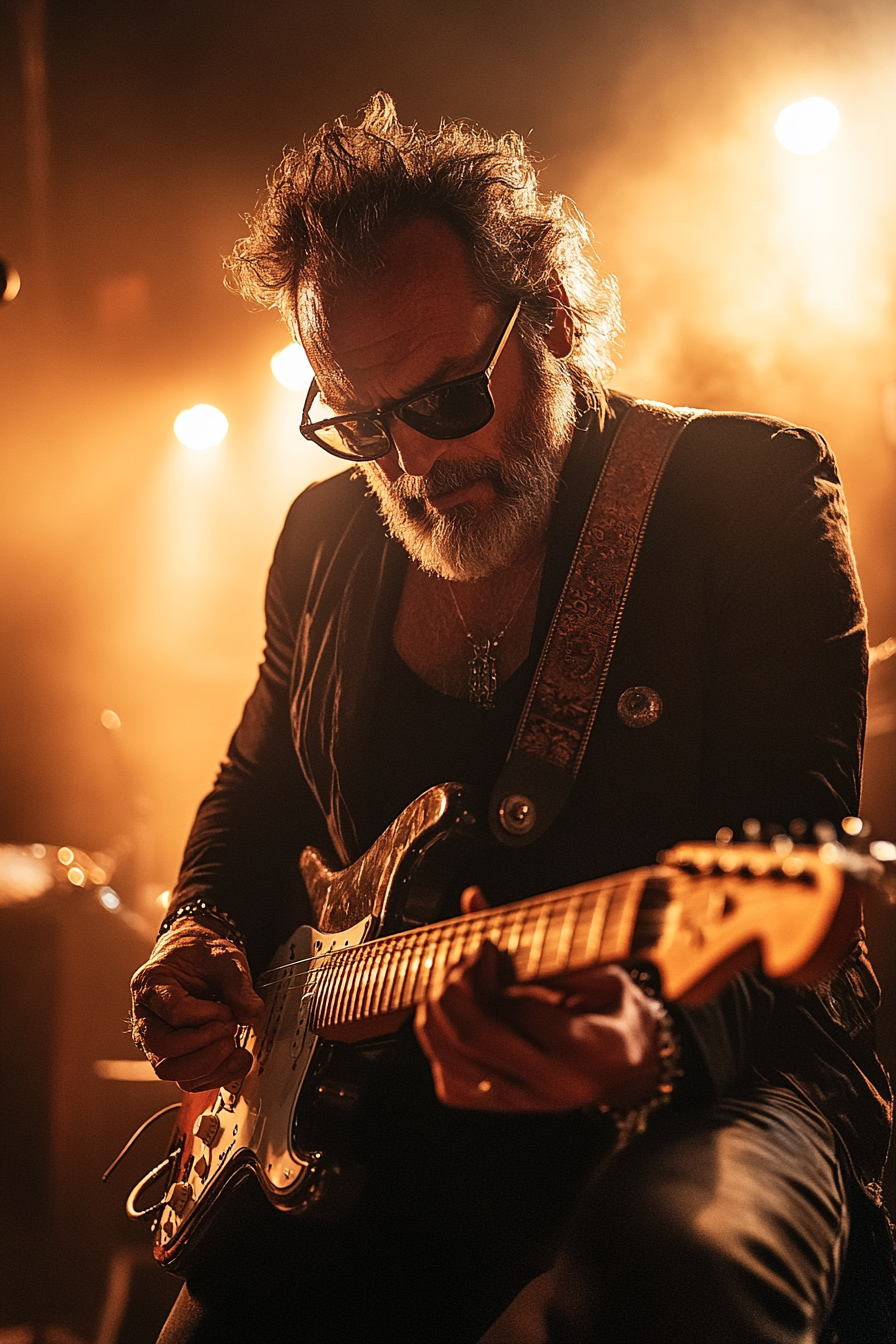
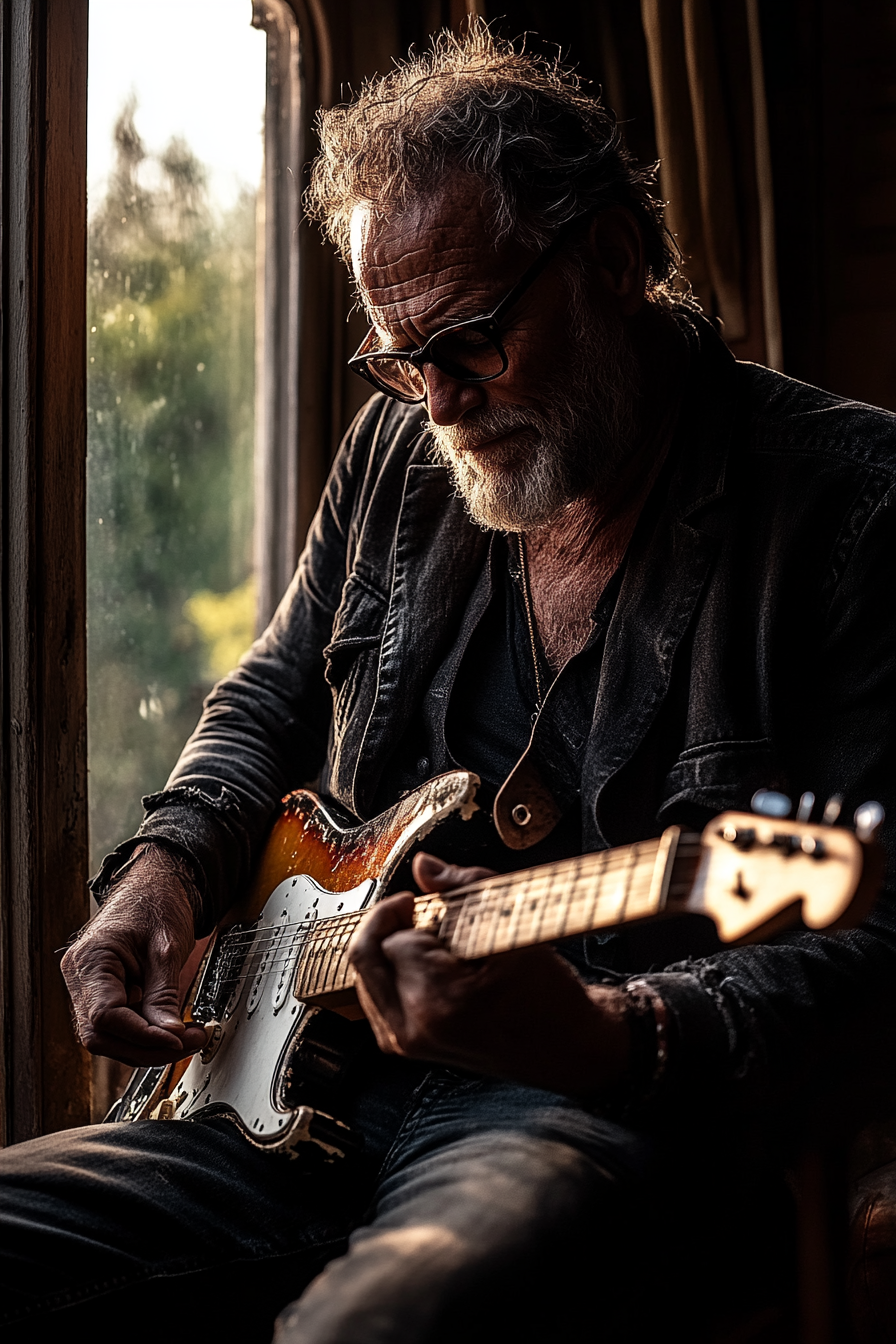
A classically trained bluesman with fingers that could make a Stratocaster weep, Jimmy spent his twenties chasing the late-night blues circuit — until his body simply refused. A self-confessed morning person, Jimmy found 2 AM jam sessions physiologically unbearable. By midnight he was yawning. By 1 AM he was asleep on his amp. Metal, with its refreshingly early load-in times, suits him perfectly. He still plays with the soul of a bluesman. He just does it before lunch.
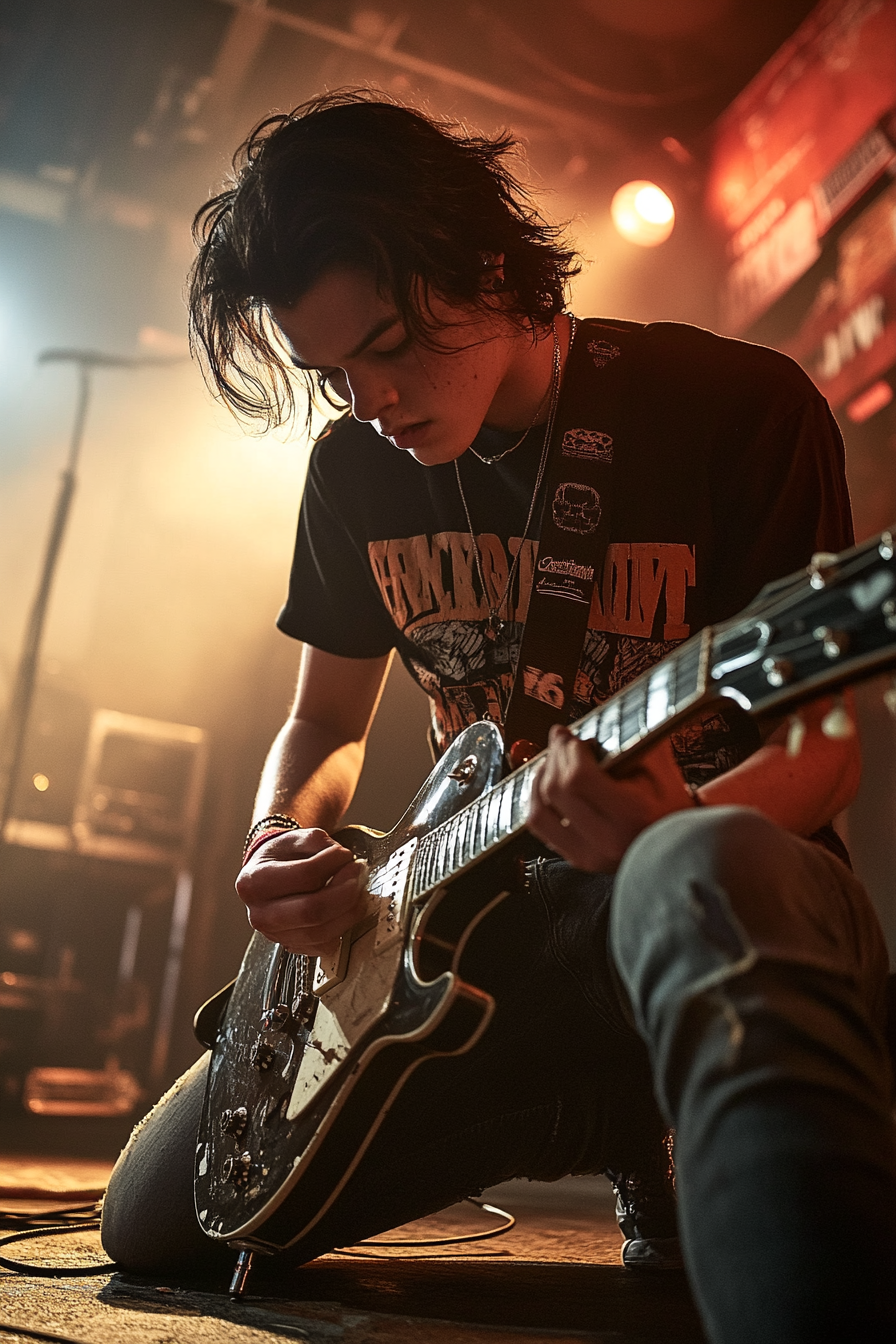
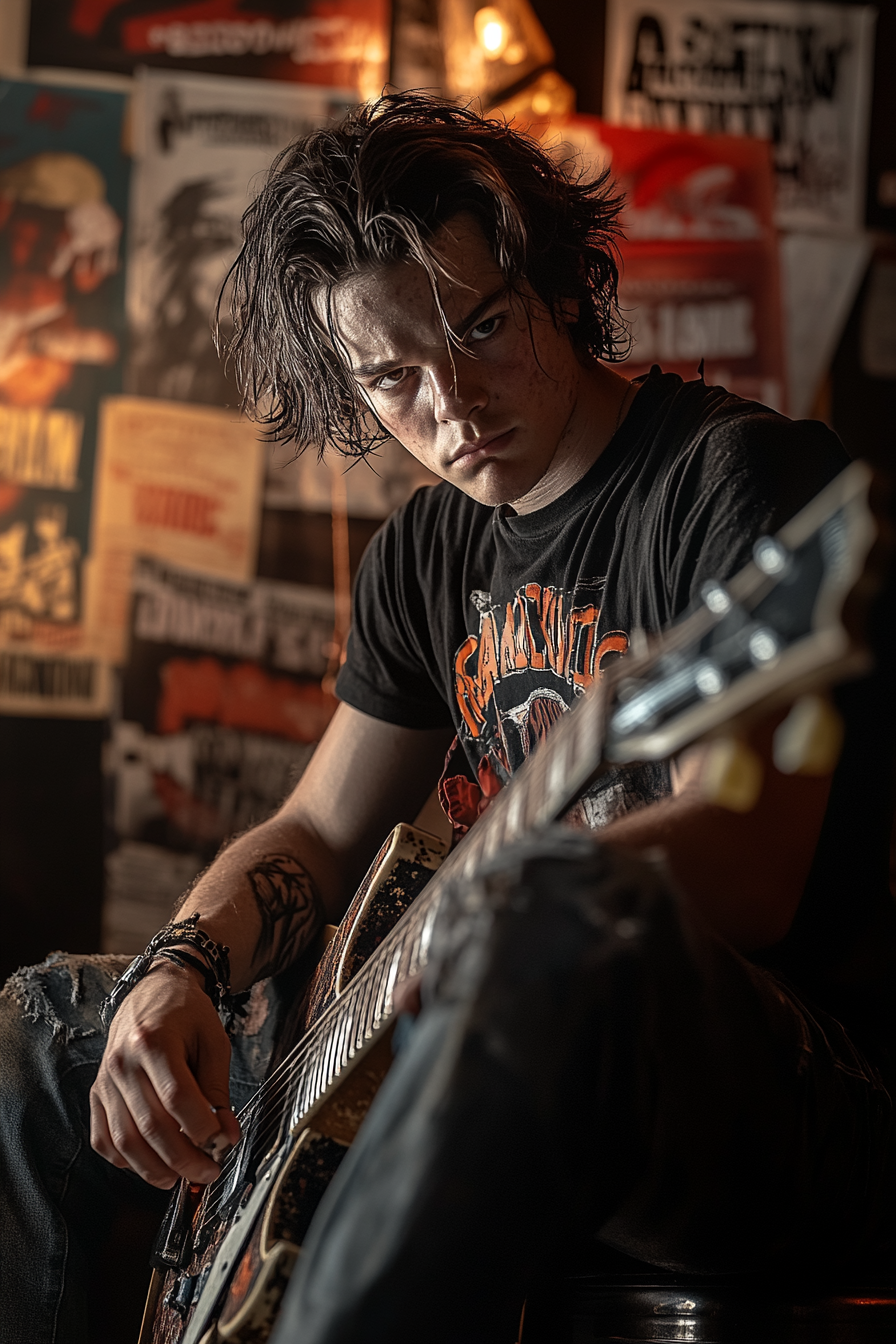
Brad was looking for a punk band. Specifically, a punk band. He misclicked. By the time he realised he'd auditioned for a sleep-themed heavy metal act, he'd already nailed the riff and everyone was shaking his hand. He thought about saying something. He didn't. That was eight months ago. Brad is fine. Everything is fine. He has learned three new tunings he didn't ask for.
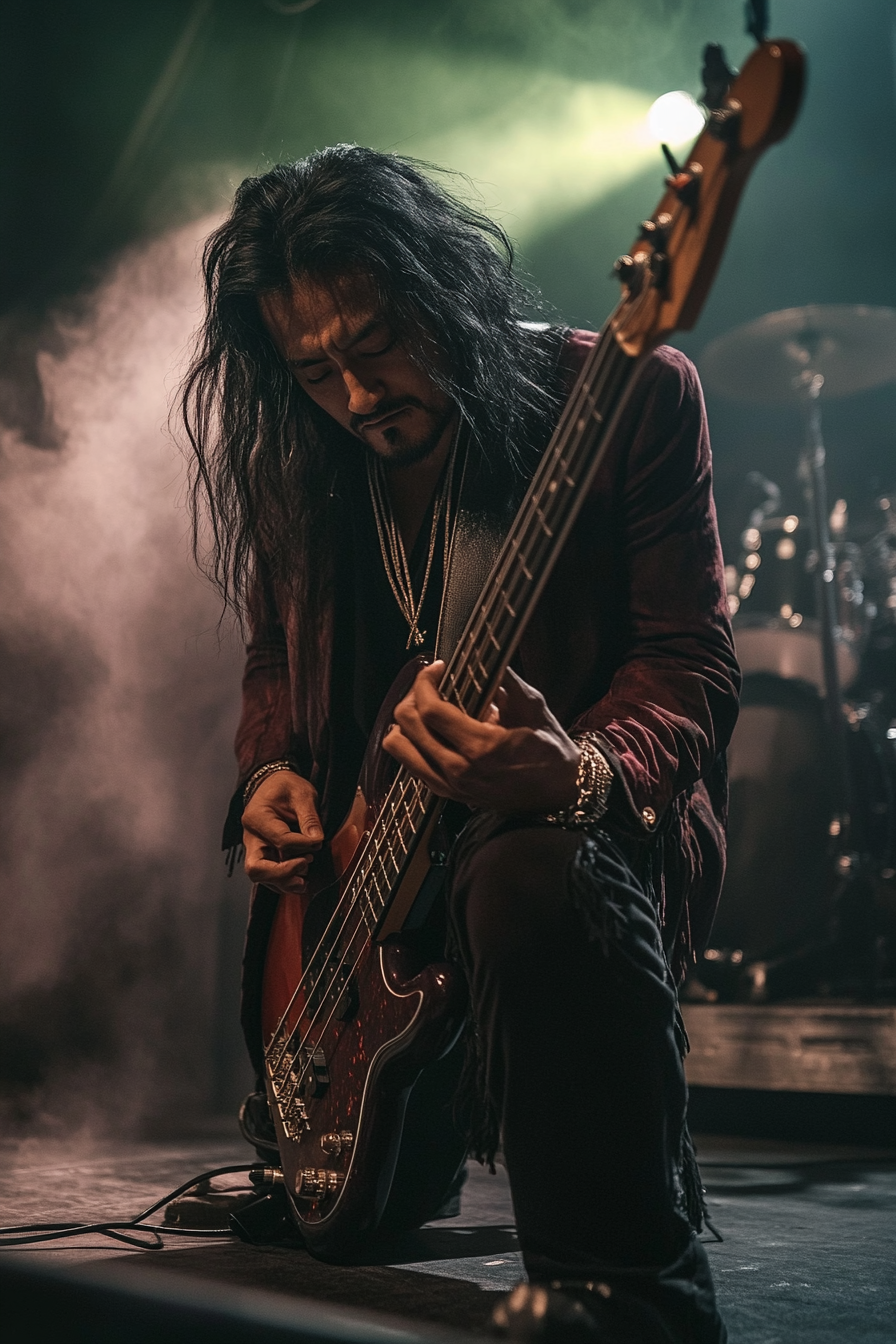
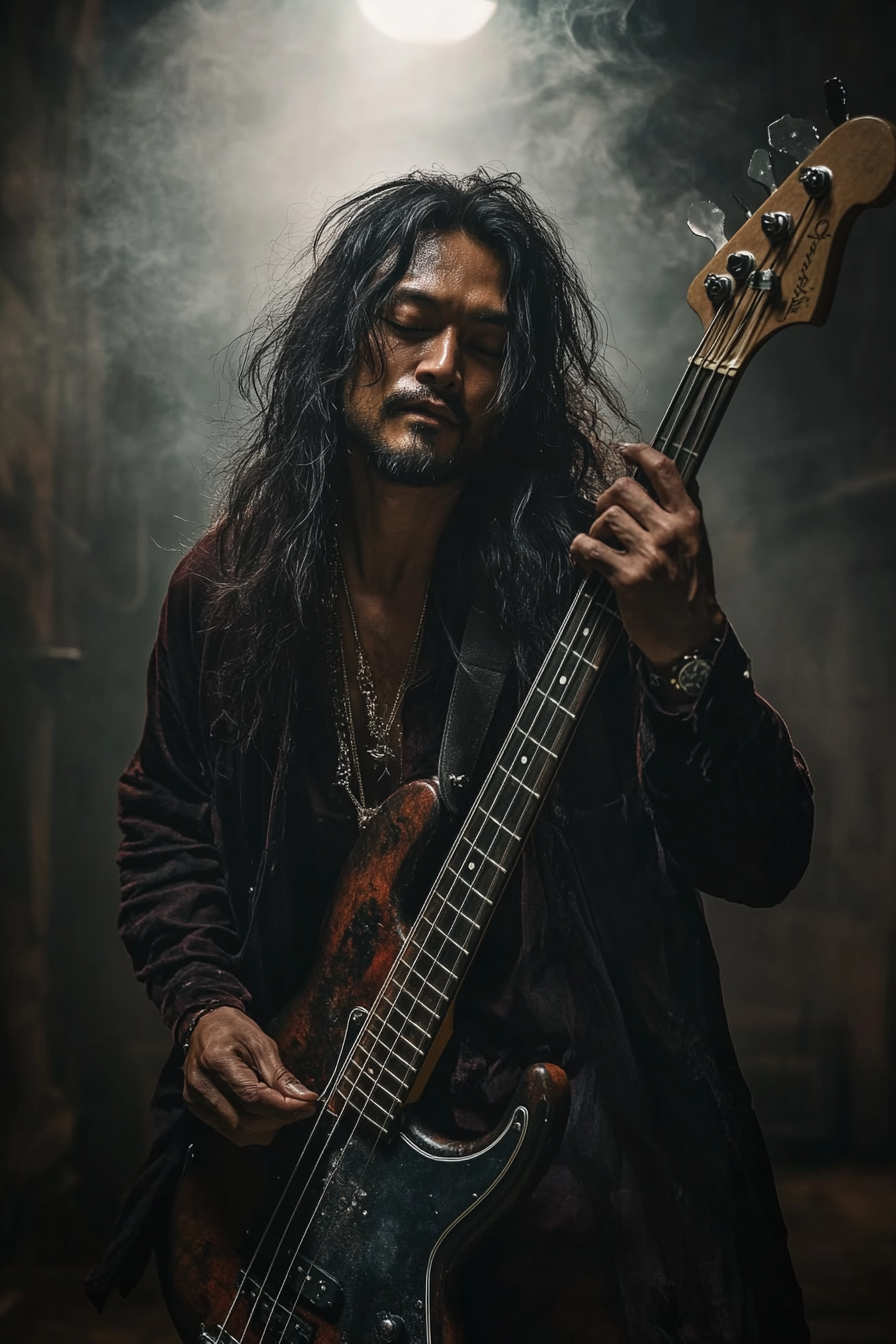
Nobody is entirely sure where El Sueno came from. He appeared at the first rehearsal without being formally invited, plugged in a bass that no one had seen before, and played a groove so deep it briefly made two members question reality. His name, loosely translated from Spanish, means The Yawning Dream. Coincidence? He neither confirms nor denies anything. His Wikipedia page exists but contains only a single sentence: "He was there."
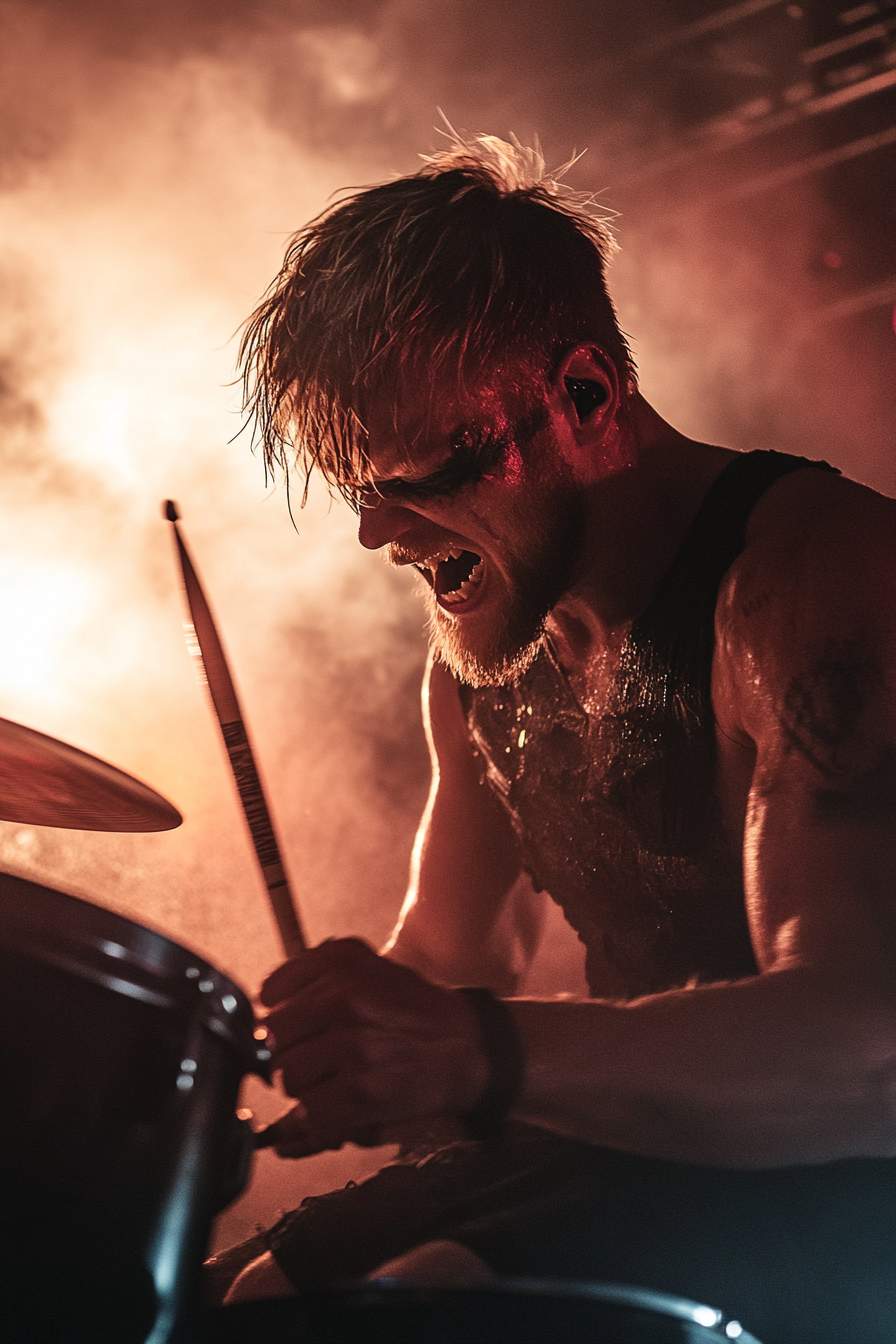
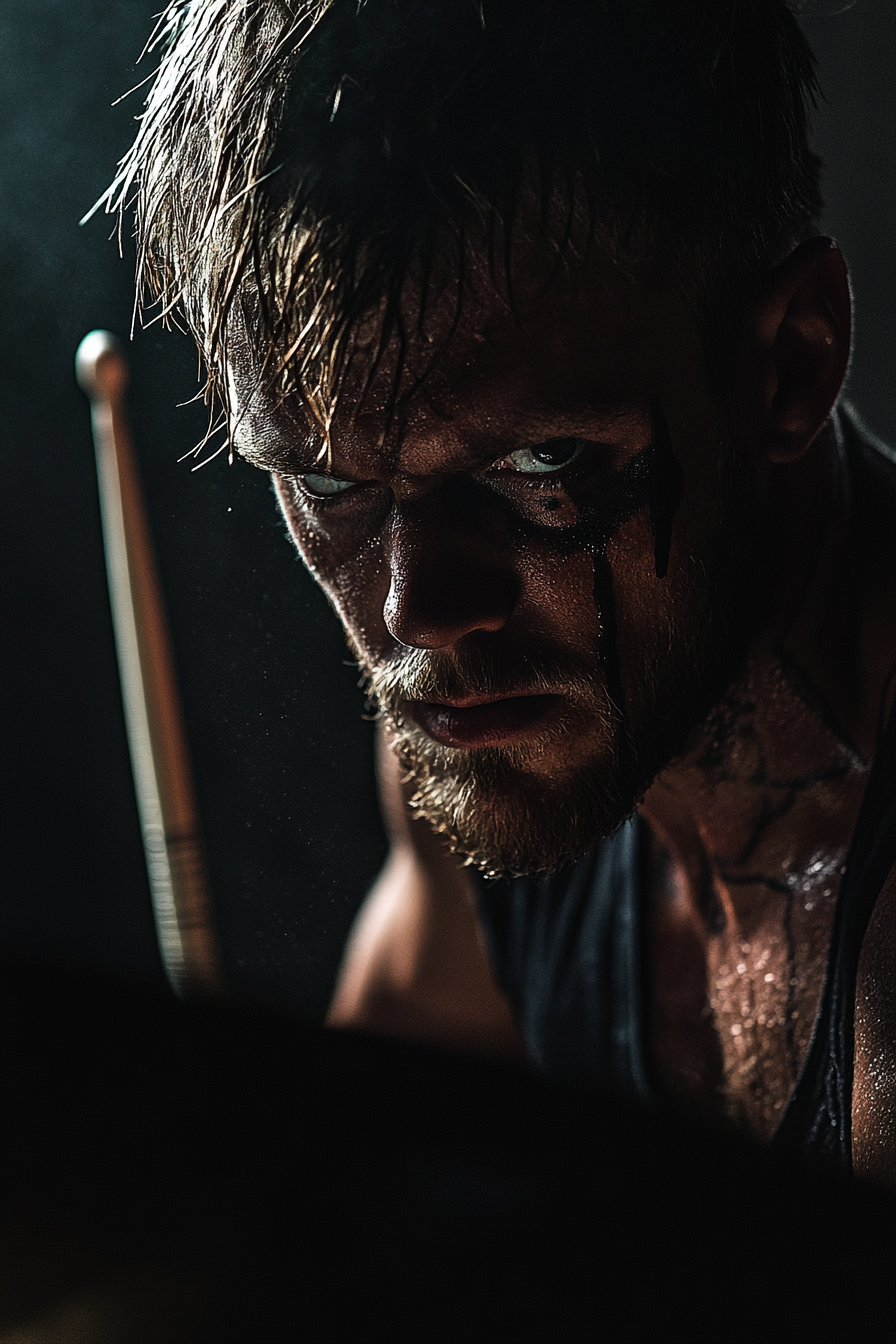
Günther grew up in the sleepy Bavarian village of Rohüphnöl, where he was the pride of the local marching ensemble — until his thunderous, increasingly unhinged drumming style caused complaints, structural concerns, and the temporary hospitalisation of a tuba player. Discharged from the ensemble under circumstances that remain sealed, Günther found his calling in metal, where hitting things extremely hard is not only accepted but encouraged. Schlaflos, for the record, is German for sleepless. He has not slept since 2019.

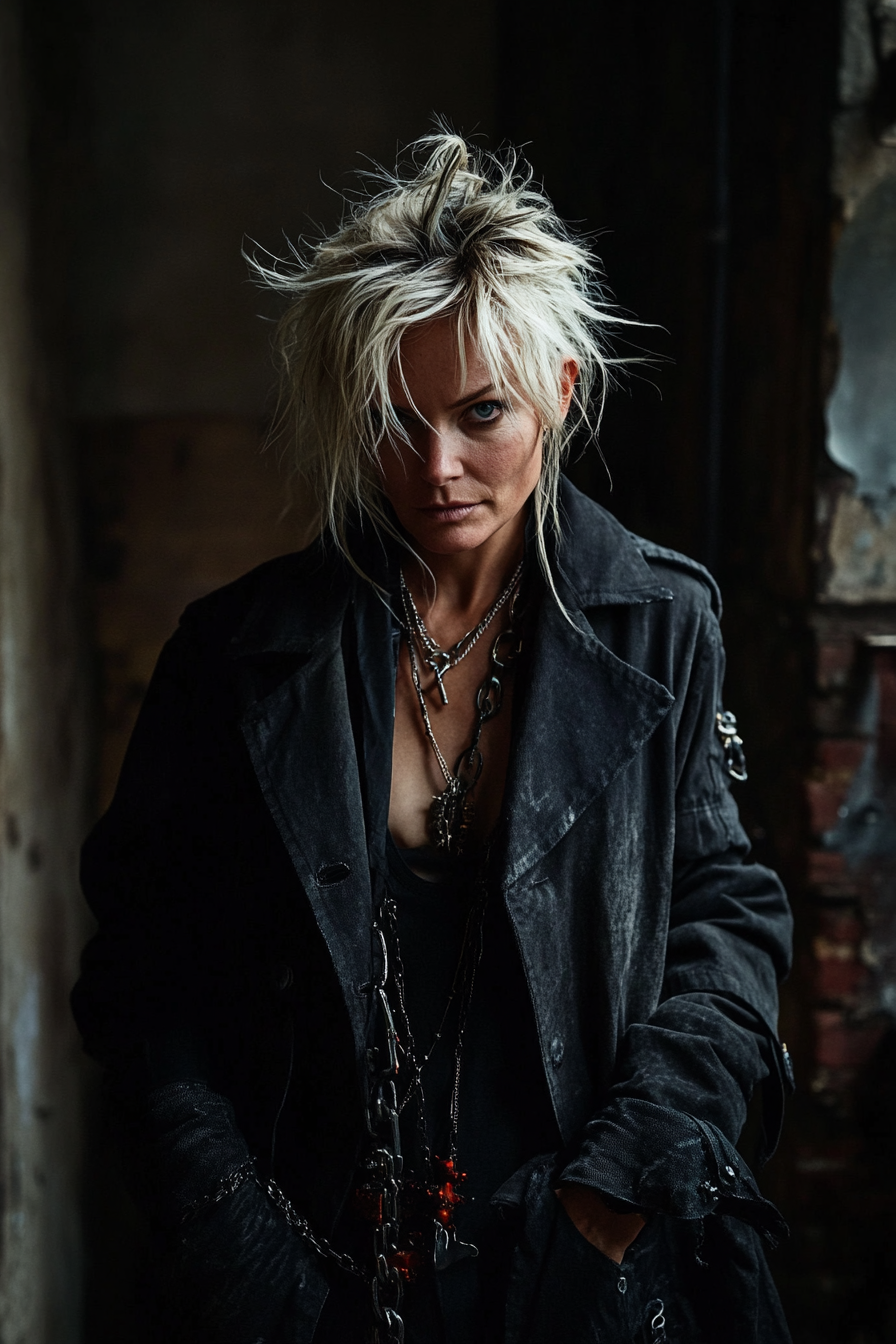
Trudy doesn't do permanence. She has lent her powerful, siren-like voice to an estimated 23 bands across 11 genres, staying just long enough to record something brilliant before her restless spirit calls her elsewhere. She joins MetalWake on an as-needed basis, showing up unannounced when the mood strikes, delivering a vocal performance that reduces grown men to tears, and then leaving before the outro fades. No one has her phone number. She has everyone else's.
METALWAKE
There are alarm clocks. And then there is MetalWake.
MetalWake is built for the kind of person who has tried every other option — the gentle chimes, the gradual sunrise, the motivational rooster — and woken up anyway an hour and a half late with the duvet over their head and a vague memory of having turned something off. This is the alarm for people who are done being polite about mornings.
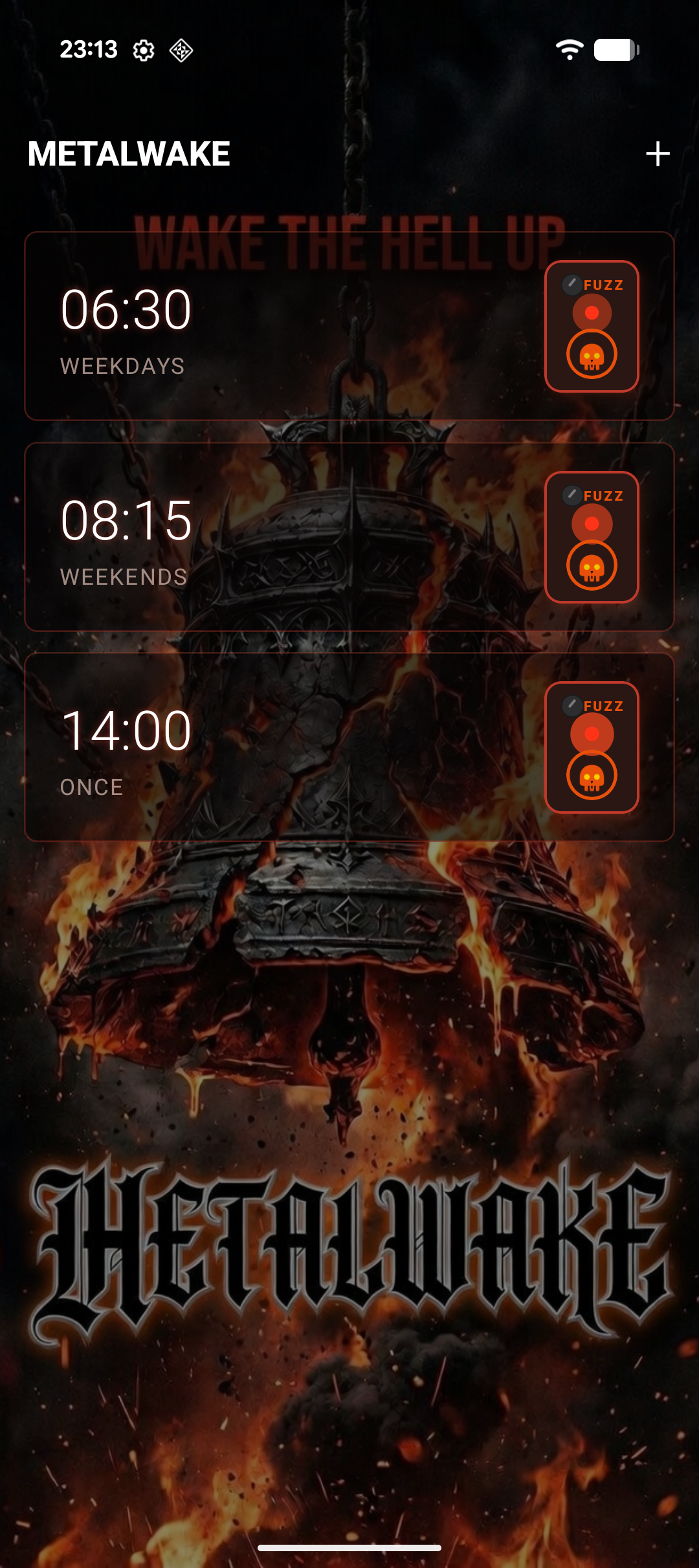
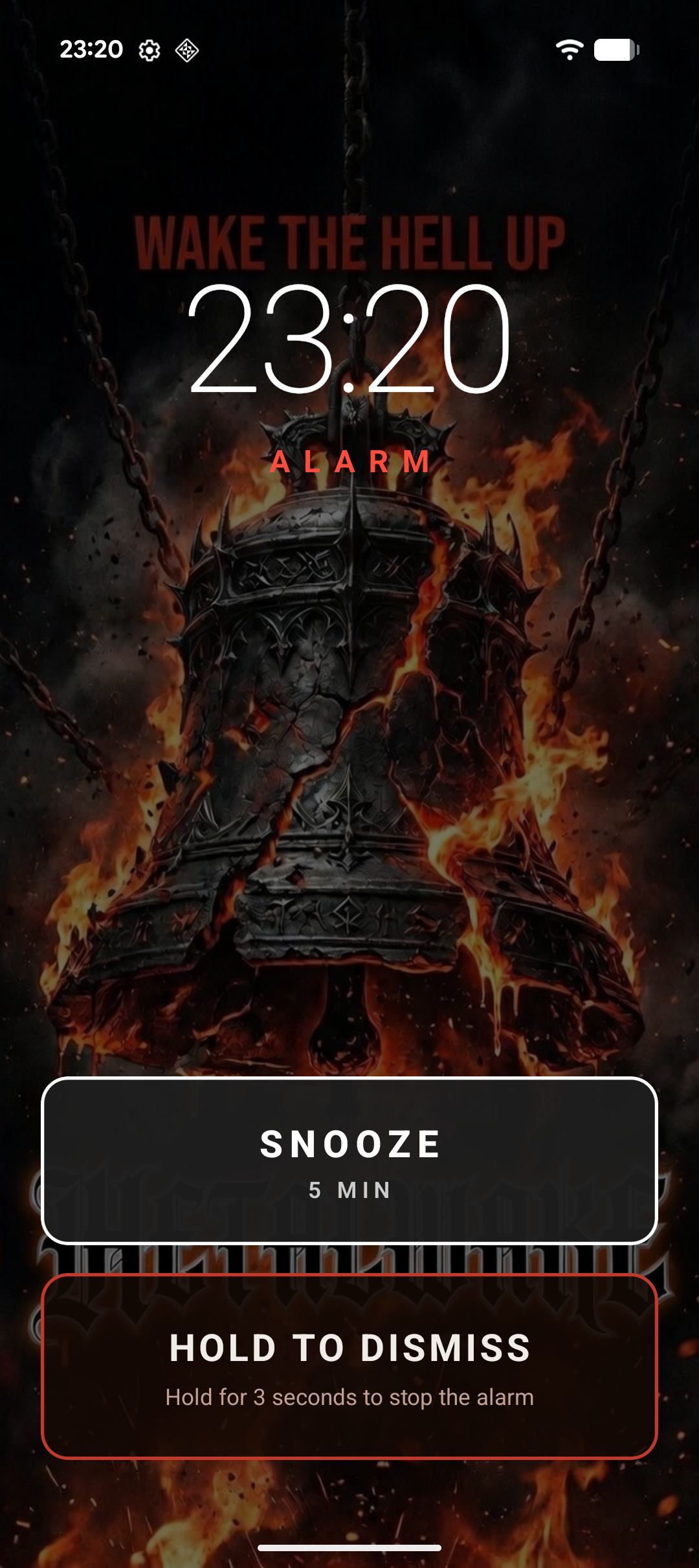
At the heart of MetalWake is a simple but non-negotiable proposition: you will wake up. The alarm fires through your lock screen, through Do Not Disturb, through every aggressive battery-saving mode your phone throws at it. It does not ask permission. It does not suggest that perhaps you'd like five more minutes. It has seventeen original heavy metal tracks ready to go, and it will pick one — or you can choose yourself, which is arguably the last decision you'll make with full cognitive function until the coffee kicks in.
Hellfire — The Pre-Alarm
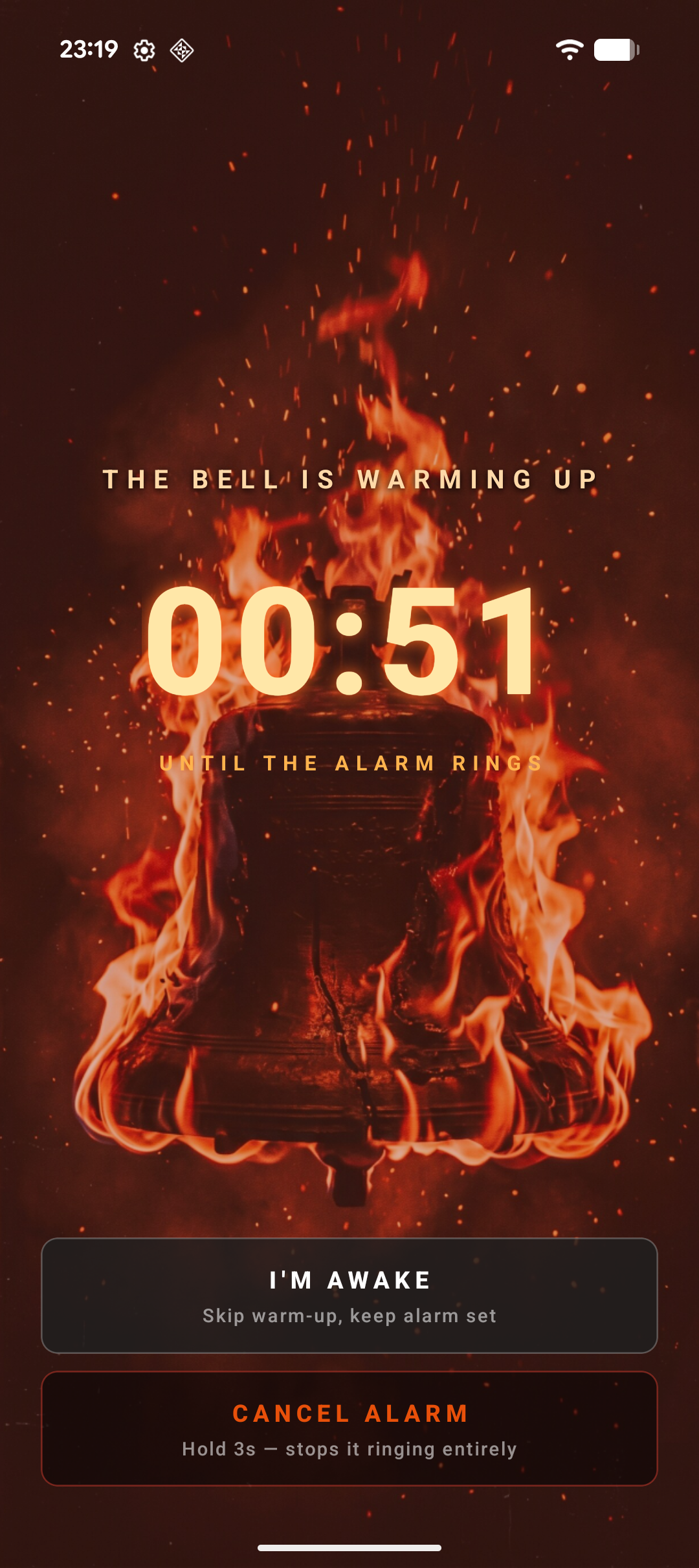
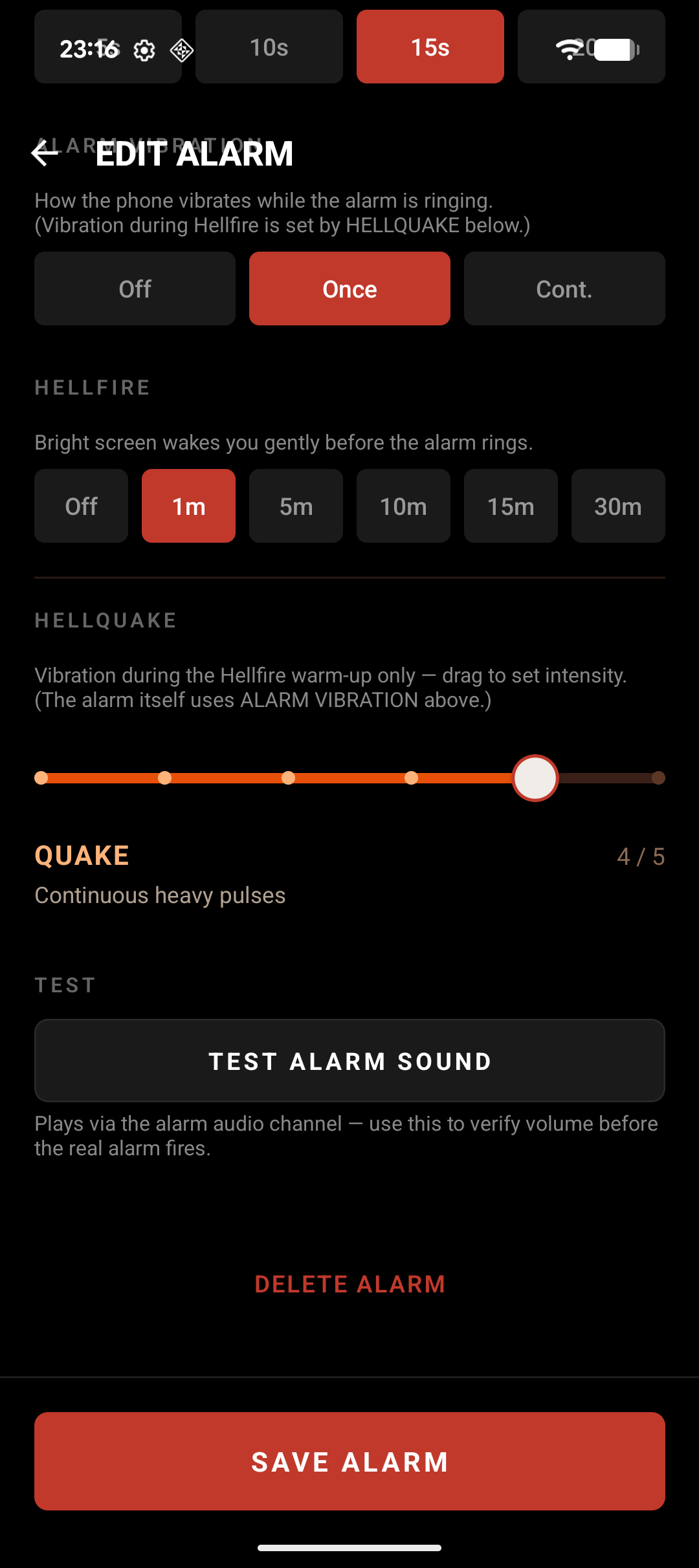
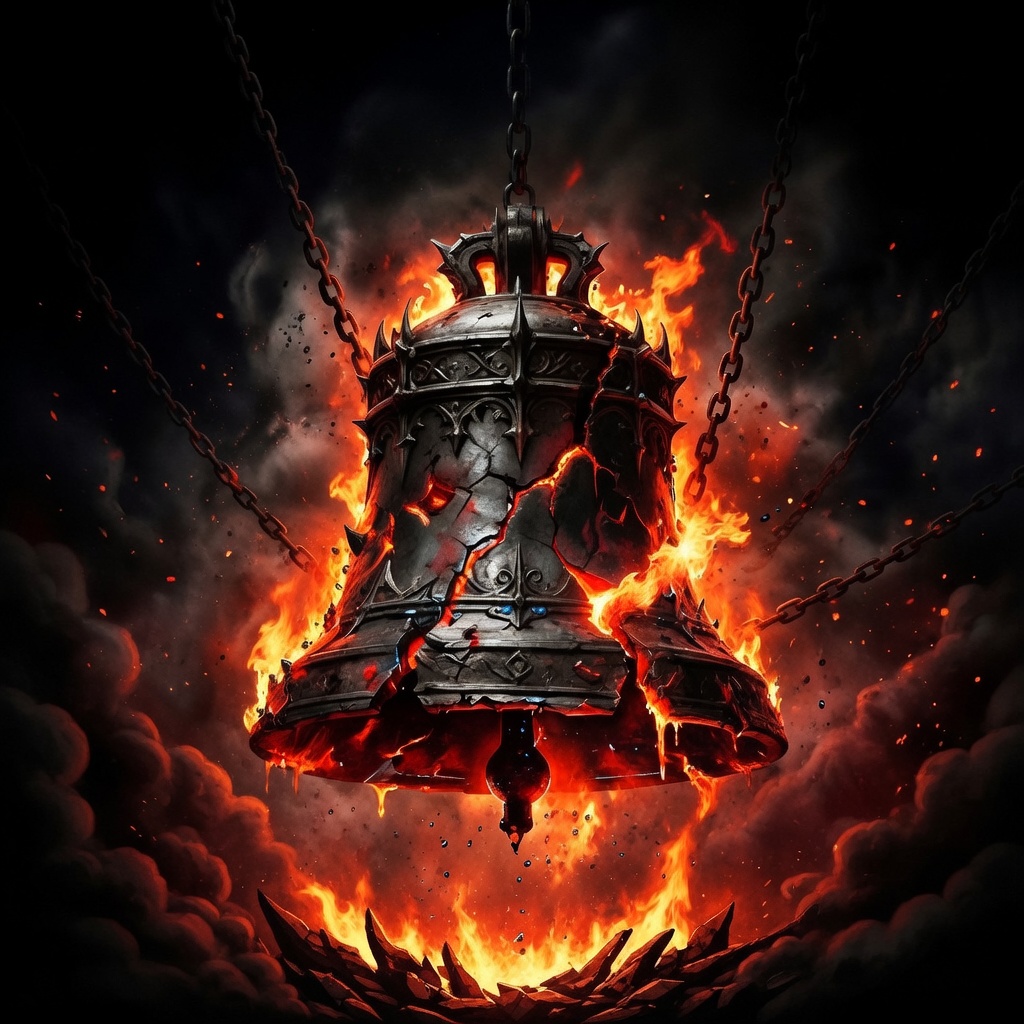
For those who prefer their wake-up call with slightly less immediate existential crisis, MetalWake offers Hellfire mode. Set it to begin one, five, ten, fifteen, or thirty minutes before the alarm proper — and your screen ignites. Ember-orange. A flaming bell. A countdown. The Bell Is Warming Up, it tells you, which is both literal and, in context, deeply ominous. You can dismiss it with a three-second hold if you're already awake. Most people are awake before they get that far.
Hellquake — Escalating Vibration
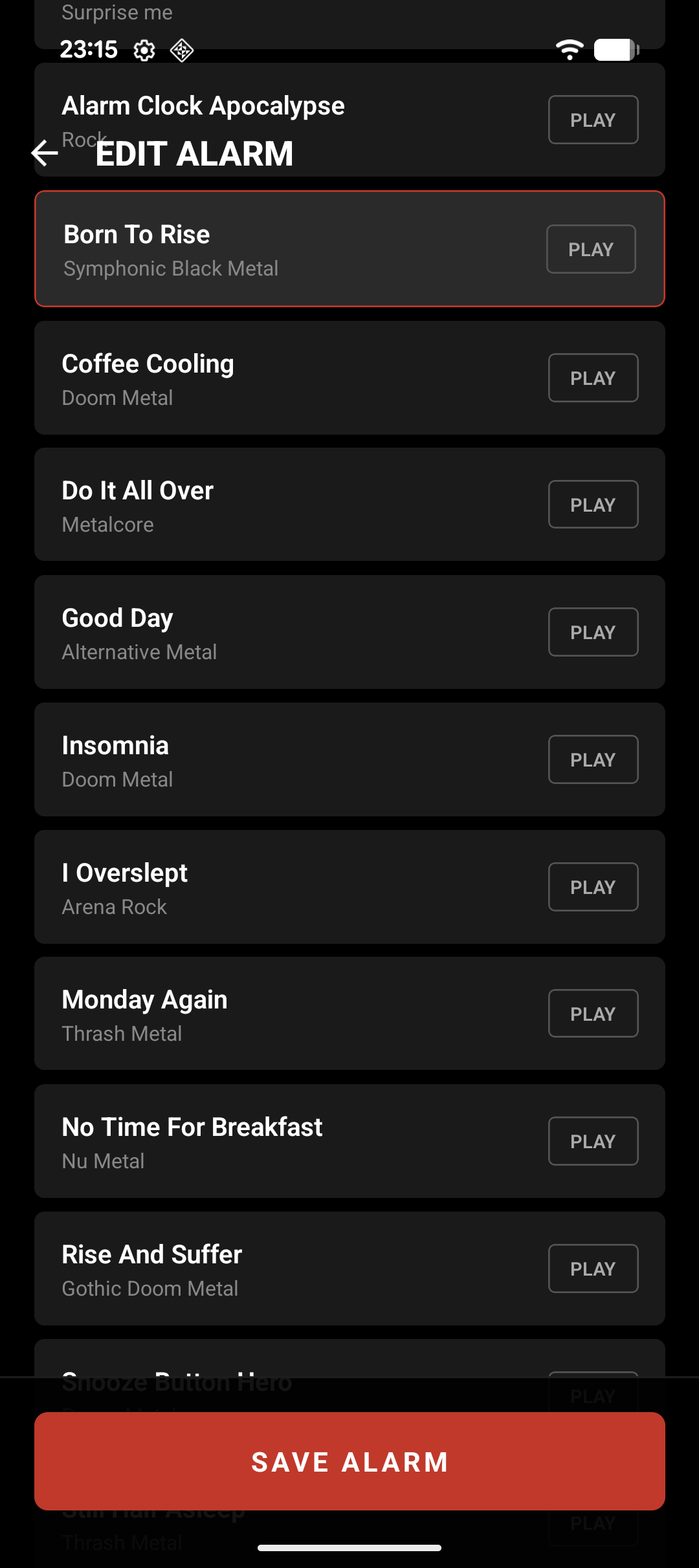
Because some of us sleep through sound entirely, MetalWake adds Hellquake: a vibration system with five intensity levels ranging from a polite HUM to a CRESCENDO that your phone's internal organs will remember. Configure it per alarm. Combine with Hellfire for what the development team internally refers to as "the full experience" and what users have described as "extremely effective" and "I was not prepared for that."
To Dismiss, You Hold
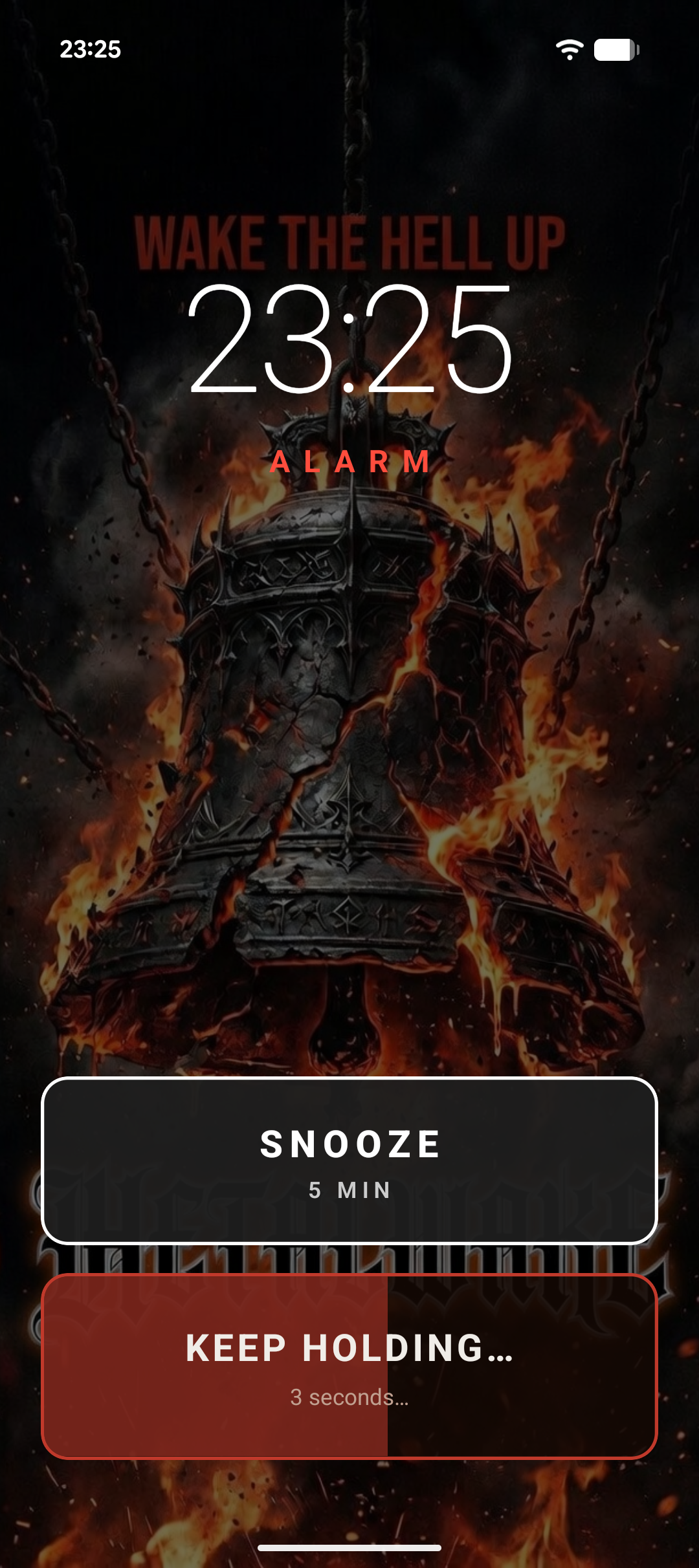
Tapping snooze is easy. Too easy. MetalWake knows this. To actually stop the alarm, you hold the button for three seconds — long enough that you are, by definition, conscious. Snooze remains available, if you need it. You get five. After that, MetalWake considers the matter settled and lets you sleep in peace, technically. The band does not endorse this choice.

THE SNOOZERS
Every great band deserves a fan club. MetalWake got the Snoozers.
The origin story, like most things in the MetalWake universe, involves a waiting room. Frank O. Lizer — veteran of the Pacific Northwest metal underground, survivor of four decades of questionable musical decisions, and founding president of what would become the world's most enthusiastically unreliable fan community — first encountered MetalWake at a small venue in Sleepattle on a Wednesday night. He had meant to arrive for soundcheck. He arrived during the encore. This was not unusual for Frank.
Frank's credentials in the metal world are, by any measure, substantial. He came up through the Sleepattle scene in the early eighties, cutting his teeth in a glam rock outfit whose name he prefers not to mention but whose hair, he insists, was extraordinary. The band was going places. The hair was going places. Frank himself was going places — specifically, off the edge of a stage in 1988 during an incident that those who witnessed it describe as "spectacular" and Frank describes as "a medical episode that has been somewhat misrepresented over the years."
He has walked with a cane ever since. The cane has a skull on it. He painted it himself.
Frank discovered MetalWake the way most people discover things that matter: accidentally, and slightly too late. But something about the band — the shifting moods, the unclassifiable sound, the sense that everyone involved had arrived at this point via a series of improbable wrong turns — felt, as he put it in the Snoozers' founding newsletter, "deeply, personally correct."
He registered the fan club on a Tuesday. By Friday, three hundred people had signed up. By the following month, the number had climbed into the thousands. The Snoozers, it turned out, had been waiting for exactly this — a band that understood them, and a community that expected absolutely nothing of them in terms of punctuality.
Membership in the Snoozers is, in principle, straightforward. You sign up. You receive the newsletter — The Snooze Report — which Frank writes and distributes on a schedule he describes as "when it feels right." You are invited to Snoozers gatherings, MetalWake shows, and the annual general meeting, which has never once achieved quorum.
In practice, the Snoozers operate on a principle of enthusiastic non-attendance. The membership rolls are impressive. The actual bodies in seats at any given event are considerably less so. Shows sell out in advance. Roughly sixty percent of ticket holders make it through the door. Of those, a meaningful portion arrive after the opening act, several arrive after the main set, and at least a handful have, on multiple occasions, shown up the following morning.
Frank takes none of this personally.
He remains, at sixty-two, the Snoozers' most visible figure — present at more MetalWake shows than almost any other member, always somewhere near the front, cane in hand, occasionally asleep on his feet between songs in a way that has become something of a trademark. The band knows him by name. Gunther once played an entire drum fill in his direction to wake him up. It worked. Frank called it the greatest moment of his life, narrowly edging out the 1986 Sleepattle Glam Invitational, where his band came second.
He has never fully explained what happened to first place.
The Snoozers have chapters in eleven cities, a merchandise line consisting primarily of pyjamas and branded sleep masks, and a Discord server that is extremely active between the hours of 2 AM and 4 AM for reasons nobody has satisfactorily explained.
Their motto, selected by member vote in a poll that took six weeks to reach sufficient participation, is simple:
Join the Snoozers on Facebook: